Saturday, September 15, 2018

Nature Newsletter No. 8---Historical Naturalists in Texas


Explorers showed a lot of interest in the natural aspects of Texas beginning in the middle 1800s.  Its climate, diverse weather and soil plus the lure of free land attracted these explorers, many of them naturalists. Some were trained in their field and some had only practical experience in field work.  Many were from Europe and probably had fortune as a side interest. Some even had an interest in the prospects of a revolution.

So, this newsletter will switch back 150 years or so and look at the activity of some of these naturalists who roamed the countryside and studied the natural features of our state.

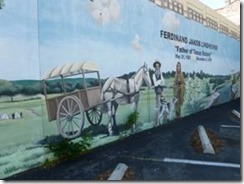
And perhaps there is no one better to start with than our so called “Father of Texas Botany” Ferdinand Lindheimer. Lindheimer occupies a prominent spot in our local history, especially in New Braunfels where he is featured in this mural just off the square in the town.  Appropriately, the mural is right next door to the oldest bakery in the state.


Lindheimer, was a German born in Frankfort-on-Main in 1801. His father was a successful merchant and even though he lost his father early on, the family was able to afford him a very good education.  He attended the university in Bonn while Germany was undergoing political change and governmental challenges.  The goal of the youth in universities and others was a constitution to unite the German Ducheys into “a new Germany for the Germans, bound together by the German tongue”.

In 1827 at 26 Lindheimer became a teacher at the Bunsen Institute in Frankfort.  There he joined other like-minded individuals in agitating for the reform of the German government. Because of his political activity, Lindheimer was rejected by his family and he cut off all ties with them.  Seven years later he immigrated to the U.S. as a political émigré.

He was 33 when he landed in New York and from the city he traveled up the Hudson River to the Erie Canal.  From there he traveled down the Ohio River and up the Mississippi to a German “Latin Farmer Community” settlement in Belleville, Illinois.  There he joined some of his German friends including George Engelmann.  However, the farming life proved boring to the young intellectuals. According to Lindheimer, “northers were beginning to blow through…. and the roof of our old log house… was so full of holes that we could make astronomical observations from our beds….and an irresistible longing for the south overcame us….for one last time a big drinking bout was held.  From the doors taken off their hinges….we constructed a large table.  In the evening our yard was so full of our guests’ saddled horses that one might have thought a squadron of cavalry had moved in, and our table was completely surrounded by happy celebrants.”


A few of the celebrants planned to go on to Mexico via Texas, but once in New Orleans they were told it was too dangerous to travel there overland and they could find no maps.  Instead they sailed to Vera Cruz, Mexico, a crossing expected to take 4 days, but “..because of bad weather and the captain’s ignorance it took eleven.”  According to Lindheimer, the captain made no observations, knew nothing of Meir’s lunar tables and did not even use any of the books in his cabin.  His bible was a book showing Gulf coastlines.  Finally landing after a miserable voyage, they made their way to Mirador, another “Latin Farmer Community” in Mexico where Lindheimer held various jobs.

While in Mexico, and most important to us, was his stint working with Otto Friedrich collecting plants and insects.  Collecting plants and insects was a commercial activity that paid money for specimens to be shipped to collectors and to museums in the Eastern U.S.  In 1915 his collections were published in the book shown here. 


In 1836, the Mexican newspapers were full of the planned “glorious northern expedition into Texas” to quell the Texas Revolution.  It was then that Lindheimer, caught up in the idea of freeing Texas, followed his original plan to go there.  It was another ill fated Gulf voyage.  The ship to New Orleans ran aground and the two lifeboats of the ship capsized, forcing the passengers to swim to shore.  After they …”had lain on the beach for several days” they were picked up by a steamboat heading for Mobile.  There he enlisted in a company of Texas volunteers.  However the battle of San Jacinto had taken place a day after he enlisted on April 20, 1836 and again the hostilities cooled off.  Not much is known about the 19 months he spent before his discharge in Houston at the age of 36.  According to Goyne, the author of Lindheimer’s letters, he did make a comment at one point that his commanding officers, considerate of his interest in plants and insects, allowed him to collect botanical specimens in the countryside while the others in the outfit were required to drill.  

In 1839, Lindheimer, now living in Houston, was invited to St. Louis by his friend George Engelmann the botanist and organizer of the Saint Louis Academy of Science. The two studied together for a time.  The next year Lindheimer moved to a little farm four miles west of Houston on White Oak Bayou to try his hand at farming.  He also kept up with his collecting, and since he was not completely happy farming he asked Engelmann if he thought he could make a living collecting plants.                 

George Engelmann then contacted Asa Gray of Harvard and the three of them worked out a plan whereby Lindheimer would collect plants in Texas and send them to Gray.  This  was employment for Lindheimer where he was paid $8.00 per hundred plants, dried between paper and delivered to Asa Gray.  This collecting went on for almost ten years.

Much of his collecting was successfully dried and delivered, but because of rainy days and leaky roofs, many times his collections rotted before they could be dried.  This drying problem was the most difficult aspect of his collecting work, ranking just above the difficulty of the horse pulling his wagon through mud and the crossing of the big rivers.  While in Houston, he ranged for months at a time collecting from Matagorda Bay to Indianola and on to San Felipe and Cat Springs.  During this time he collected more than 1000 specimens, many of which “spoiled before they were dried”.

At one point, Lindheimer acquired a book titled Flora to use as a reference.  He was careful not to send to Asa Gray any plant specimens already recorded, so he used this book as a reference.   

In Houston, Lindheimer was told that to the north and west was higher ground and maybe a better place to collect plant specimens.  So, in 1844 he loaded his tools and journals and with his dog set off for Bastrop, then to Austin.

As Lindheimer collected the specimens, they were then either preserved or documented by making a drawing. Here is a specimen that was collected in 1927 of Lindheimer’s Senna and is now a botanical plate housed in the University of Texas in Austin.  This is the largest herbarium in Texas with over a million plant species.


In 1844, Lindheimer was granted a parcel of land in New Braunfels, where he built a cabin to use as a base for collecting. The cabin has been preserved.  It is located in New Braunfels on the bank of the Comal River.


Ferdinand Roemer, another German naturalist, sought to meet Lindheimer at his home in New Braunfels and found him “in front of his cabin splitting wood….. a thick black beard covered his face, but he instantly knew he had found Lindheimer”.

The two men had much in common and collected together during Roemer’s time in Texas.  Think of Ferdinand Roemer next spring as your shade-loving red cedar sage plants, Salvia Roemeriana, bloom.

Writing to Engelmann in October, 1845 about his botanical garden, Lindheimer tells him that it won’t take too much of his time as he has “somebody who fits into this situation.”  He had met a 28 year old woman and they had married in May.  She was a wonderful helpmate and very good at pressing and packing the plants.

After some time, Max Eugene was born. Later, as Max was out and about the yard of the home, Chief Satanta of the Kiowa tribe, a friend of Lindheimer’s,  offered to trade a young Mexican girl and two mules for little Max.  No deal, said Lindheimer.

Lindheimer ended his contract with Gray and Engelmann in 1851.  In 1852 he became the editor of the Neu Braunfelser Zeitung and continued this position for the next 20 years.  He was very active in the community. The Sophienburg Museum in New Braunfels is definitely worth a visit, as it contains several displays of Lindheimer’s work.

Ferdinand Lindheimer died in New Braunfels at the age of 78 in 1879.

According to Joe Marcus of the Lady Bird Wildflower Center, Lindheimer is credited with the discovery of 41 taxa, including one genus, 24 species and 16 varieties of plants, all of which are named after him.

Over his collecting period, he collected more than 1500 different plants.

Along with Lindheimer, Roemer, Engelmann and Gray, a few other naturalists working in Texas deserve mention.  Thomas Drummond, a Scot, collecting for Wm. Hooker of the University of Glasgow, was in Texas in 1833-34 traveling from Galveston to Victoria and was in Bastrop during a cholera epidemic and the Great Overflow of 1833[1].  He discovered 750 plant and 150 bird species.  Thirty-one Texas species bear his name. Think of Drummond when you see the Drummond Phlox, Phlox Drummondii  along the roadsides in March.

Charles Wright (1811-1885) was an American born international botanist, Phi Beta Kappa Yale graduate and friend of Asa Gray.  In 1837-1845 he was active as a teacher, botanist and surveyor in Zavalla, Texas (S.E. of Lufkin) carrying on explorations along the Neches River and over to the Sabine River.  June through September in 1849 he walked 273 miles from San Antonio to El Paso collecting specimens during 104 days.  Oct.-Nov. he walked back in 42 days having collected 1500 species for Gray’s Harvard herbarium.

After 15 years he left Texas to collect all over the world.  Think of him when you see Flame Acanthus, Anisacanthus  QuadrifidusVar. Wrightii, blooming right now.

Gideon Lincecum (1793-1874) was an American born in Georgia whose family was always moving westward.  He became a friend of Choctaws and Chickasaws and by 1830 was specializing in Indian herb medicine.  He explored Texas for possible settlement, lived in Washington County for 20 years and wrote an agricultural paper presented by Charles Darwin at the Linnaean Society in London.  His extensive collecting trip in Central Texas produced flora and fauna sent to the Smithsonian in 1867.  Think of him for identifying the antique white shrub rose, named Gideon Lincecum.

Julian Reverchon (1856-1905) was the first to collect extensively in the western Edwards Plateau.  He personally collected 2,600 species and 20,000 specimens making it one of the best collections of its kind.  It can be seen at the Missouri Botanical Garden in St. Louis.  In Dallas the original Turtle Creek Park was renamed Reverchon Park in memory of Julian Reverchon.


Books


Wimberley and San Marcos Libraries both have A Life among the Texas Flora and Roemer’s Texas.

San Marcos has Naturalists of the Frontier
                                       
Sightings

The cooler wet weather should have brought out more wildlife for sightings, but hardly so here.  We observed one snake, a rather mature whipsnake slithering across the driveway heading for cover.  It seems there is always one cottontail rabbit around (so there must be two) and sure enough, one showed up at the birdfeeder spillage.

Five youngster raccoons showed up one evening for a dip in the metal stock tank, then ambled off into the woods.  I think they intended to visit with the cat, but she would have no part of them, so they left.

R & D Tusch


[1] On November 13, 1833 an especially intense Leonids meteor shower became one of the most spectacular astronomical sights ever seen in the modern era.  This was before street lights and the moon had already set.  People awoke thinking their houses were on fire.

Saturday, August 25, 2018

Nature Newsletter No. 7--Springs, Sinks And Caves


Rain produces interesting effects. From rain comes springs, sinks and caves, all due to the action of water.  This newsletter will focus on these three effects, all observable in our area.

Hays County has about a dozen springs that have a significant flow.  Most flow year round, but some go dry during periods of drought.  When you think of a spring, think about its source of water, a rather large pool of water contained in the underground karst formation, mostly limestone.  The recharge of this pool of water is, of course, rain.  Someone has probably made the calculation about the capacity of this pool of water that feeds the springs, but we can assume that it is very large, like trillions of gallons.  Of our 35 inches of rain per year, maybe a inch or less of these 35 inches make it into the pool. Pumping, evaporation, runoff, and plant usage take the rest.  So, protecting the areas (the recharge zone) where rain can enter the pool is important.

The San Marcos Spring(s) are plural because the water that flows into Spring Lake comes from many springs in the immediate area, most of which are on the bottom of Spring Lake.  The area around the springs was a gathering place for humans for thousands of years.  We came close to destroying the beauty of it during the last century with all the entertainment focused in the area. The blind salamander, and other rare and unusual plant and animal life are found in the water.  Downstream of the lake one can see Texas Wild Rice, only found here in the river.  The major protector of the river and its water source is the San Marcos River Foundation.


Jacob’s Well is located northwest of the center of Wimberley in the Woodcreek area.  It now is owned by Hays County along with a substantial holding of surrounding land that is designated as a Natural Area.  Before Hays County began to organize and control the usage, the usage by swimmers was high, but now the access is more difficult and the recreational use of the water has been reduced to a manageable level.  Jacob’s Well is a circular hole about 10 feet in diameter and some 120 feet deep.  Many years ago, it was a favorite place to dive into the depths, but there were fatalities and that usage has been stopped.  Sometimes when you visit the well, the flow is so strong up and out of the hole that a person would have difficulty swimming down into it.  On a recent visit, the water flow was very much reduced, probably due to our current lack of rain.

Note: It’s an easy walk back to the well until you come to a steep set of stairs toward the end where I waited for R to check out the rest of the route.  There is a hand rail on the stairs and I had my cane which made a pretty good walking stick, but from there on the trail was over rock which fell away to the right with a steep drop to the creek.  I had seen the well before when its access was much easier from the other side and decided to pass on it.

In addition, it’s worth mentioning that the county has added a bird viewing blind and in the prairie area they are planting native grasses.  We were there soon after they opened at 8 am on a Sunday and had the main trail  pretty much to ourselves until we neared the parking lot on the way back.


Also in the Wimberley area is the Blue Hole.  This is a large pool of water with good spring flow.  It is considered to be a tributary of Cypress Creek that flows through the center of Wimberley.   The flow of this spring is strong at about 50 gallons per second.  The Blue Hole needs this strong spring flow as it is heavily used in the summer months as a place to swim.  Get there early in the day if you want to get into the park. Its access is limited.

Two other springs need recognition, one close by, the other on remote property and a good flowing example of a spring.  The one close to us is Purgatory Springs, considered to be the source of Purgatory Creek.  Purgatory Creek is dry most of the year, but the water from Purgatory Springs can be seen at the intersection of Hugo Road and Purgatory Road.  Most of the springs are on the ranch across Purgatory Road on the ranch, near the windmill that you see from the intersection.  Some other small flows come from the ranches east of this intersection, like on the Stoepler Ranch, the gate that you pass on Hugo Road between the   intersections of Summer Mountain Dr. and Purgatory Rd.   The pond as one nears Purgatory is a good place to catch sight of ducks during their season of migration.  During the severe drought of 2011, the pond was nearly dry.

The other spring of the area is Bank Spring, also known as Little Arkansas Spring.  It gushes from the high bank alongside the Blanco River at about 30 gallons per second during periods of adequate rainfall, but seems to be very dependent on local rainfall .  This spring is located in a remote area so it is hard to get in to view it.

In the Dripping Springs and Driftwood area there are several noteworthy springs.  They are Walnut Springs, Dead Man’s Hole, Ben McCullough Spring, Rooster Springs, and Capt Springs.  We have not explored any of these.

Sinking Streams, Sink Holes and Caves   Sinking streams are places where flowing water disappears into the ground.  Of course the most noteworthy sinking stream in the nation is the Humboldt where the Humboldt River flows out onto this broad plain and then just disappears. That is in northwest Nevada. In Texas, we have two flowing sinking rivers for sure; one is the Frio River and the other is the Nueces River.  Both are known to disappear in gravelly beds only to reappear miles downstream at a much lower flow rate.  Here in Hays County, we are not aware of any sinks on flowing streams, but the number of sinks on dry creeks is about 600.  These are sites where, during heavy rain runoffs, the runoff water disappears into a sink hole.  This is the water that feeds the pool of water that provides flow to many of the springs.  As you recall, there was a link to a running water sink hole that was shown in the last newsletter.   These sinks need to be protected because developers have a tendency to fill them with concrete to make the land more useable for development.  Sink Creek, in Hays County, suggests it’s a creek that sinks but we have not verified or determined that.  Below is a link to a sink hole in Round Rock that exposed a cave this year in February.  The event was apparently triggered by a water main leak that eroded the ceiling of the cavern which then allowed the road to collapse into the hole. 

Use Ctrl , then click to activate the link.


Another related underground cavity made the news in Louisiana when an oil drilling rig was putting down a hole in an area known to have underground salt deposits.  These underground salt deposits (there are many in the Gulf Coast area) are often cavernous, that is they are not solid salt, but have large volumes of open space.  The oil rig was drilling a hole in a brackish lake when the drill bit broke through into the roof of the salt dome that was a salt mine. In a matter of a few hours, the lake drained itself into the salt mine, and eleven barges went down the hole, now enlarged from drill size to many feet across.  After flow from the  lake filled the entire cavity, water from the gulf filled the lake and then nine of the two barges refloated  back up through the hole. 


Texas is a cave-rich state. The area of the state where most of the caves are found is in a band along the bottom of the state from the Balcones Fault all the way to El Paso. This belt where caves are found extends beyond the western edge of Texas as evidenced by Carlsbad Cavern.

We have 260 caves in Texas.  These caves are all of a size whereby they have been entered and surveyed.  Most of them we, as the public, will probably never know about.  Cavers have learned that the only way to preserve the beauty of the limestone features of a cave is to keep it secret.  In fact, the person who explored the big cave that was named Natural Bridge Cavern said that the only way to preserve an accessible cave is to commercialize it.  Thus, we have maybe 10 or so commercialized caves in Texas.  The big cave names are Natural Bridge, Sonora, Wonder, Devil’s, No-Name and a few others.   Before we get too far along, we need to remind the reader that cave explorers are called Speleologists or Spelunkers for short.  They call themselves cavers.

All of this karst, springs and cave investigation reminded me of the geology courses I took at what was then NHCC at the south campus when we lived in Humble.  Inks Lake and Longhorn Cavern were stops on a class trip in that course.  So,I planned a trip for us to revisit that cave.  We left BWR at 8 am on August 9 and arrived at the old CCC- built (Civilian Conservation Corps) State Park at 9:30 in plenty of time for the 10 am tour.  The cave is not the most stunning in the state, but it is the longest and the only one formed by the action of a river of water that  dropped into a sink and flowed underground for the last mile before joining the Colorado River.  Its mild acidity and erosive action carved the cave rooms and corridors.

The tour took 1½ hours and we covered 1¼ miles.  Not surprisingly, it took the CCC workers six years back in the thirties to clean the debris left by the ancient river out of the cavern.  Working with low-powered head lamps and hand tools they built wonderful state and national parks all over the United  States.


The cave was beautiful and I’m glad I went now as the walk over the uneven stone was a bit challenging even with my cane.  However it was well worth the effort and it was lovely and cool in the cave!

Observations and Sightings

On 8-07 around 6:30 pm one of those brief downpours came through and one of its outer edges occurred right over the middle of our house.  The sun was shining in the front yard and only a few drops could be seen while in the backyard it was a torrent.  This went on for several minutes before the rain stopped and we saw no rainbow.  R looked up the weather and it was showing North/South vertical showers.  We had never seen this curtain effect before in such a dramatic divided situation.

The Painted buntings have left us and the Purple finches have arrived.  There are probably no more than a dozen very small Eastern Pipestrelle bats in Longhorn Cavern and we saw about four clinging to the rock.  They are non-social and do not hang together, literally and they fly in and out on their own.

David F. captured an image of a Gray Fox that paid his place a visit.  A beautiful wild animal to say the least.


Books

Texas Caves by Blair Pittman (1999) available at the Wimberley Village Library.  This book was very interesting, but I was looking for a book with information closer to home.

I found Karst of the Urban Corridor on the website of the Texas Speleological Survey and ordered it, an 8 1/2 X 11 one hundred and eleven page paperback with 5 pages devoted to Hays County.


R & D TUSCH

Saturday, July 14, 2018

Nature Newsletter No. 6-----Water

“Water, water everywhere and not any drop to drink”. Who said that? It was poet Coleridge who wrote that line in 1798 in his work titled “The Rime of the Ancient Mariner”.

Water is so important to Texas that we too may be singing that refrain. In this newsletter, we will explore the background of water supply in Texas and then get into how to use water sparingly.

Texas has nine major aquifers as shown on this map by the Texas Water Development Board. These aquifers can range from a few hundred feet below the surface to a thousand or so.


The blue zone in the Panhandle area is the Ogallala Aquifer. It is considered to have a finite supply of water because its origin is water from the Rocky Mountains and the recharge rate is so slow as to be nothing in our time frame. We spoke with a pumpkin farmer in the area near Clovis, New Mexico who had pumped from the Ogallala for years to irrigate his crops, but had to quit farming because the water level in the aquifer had dropped below the level of his wells. Travelling through this area shows that there are many farms pumping water almost constantly to irrigate crops. This aquifer holds a very large amount of water and the demand on it is principally agricultural.

Near home, we have two aquifers that provide water to individuals and cities--- the Trinity and the Edwards. The map shows the Trinity as dark green and the Edwards in dark blue. The Edwards Aquifer is nearer to the surface than the Trinity, and in the realistic view, is “owned” by the cities that sit on top of it and especially by the city of San Antonio. Private wells drilled in our area must be driven on through the Edwards and into the Trinity. Drillers are required to sleeve the well in the zone of the Edwards to prevent water seepage from the Edwards to the Trinity and prevent unintentional pumping from the Edwards. Water in the Edwards can be viewed as local water, that is, the aquifer is recharged by local rains which find their way into the karst formations[1] of limestone caves, sinks, ravines and underground streams through eroded holes in the earth. A photographer caught this dramatic video when he filmed a large stream of runoff water on the San Marcos River Foundation (SMRF) ranch. The runoff water is shown disappearing completely down a hole in the limestone terrain on its way to the aquifer. To see a video of this please click on the hotlink to the SMRF website and scroll down to the Cave Recharging Video. Click on the picture which will produce the video. If you are interested in areas of concern like Pumping Permits please see that article as well. This is a very hot item in Wimberley, Kyle and Buda. In fact Buda and Kyle are getting so concerned about their future water supply they are considering piping water from wells in the Carrizo aquifer to the east of us. There is little doubt that our underground water supply is diminishing.

Another area of concern is building anything on or near the karst formation areas. The Craddock Road Extension was recently turned down by the San Marcos City Council because of research presented by Diane Wassenich of the San Marcos River Foundation. These areas must be kept free for rains to recharge the aquifer. We also talked to a young woman in Wimberley not long ago who was very familiar with seeing developers building homes in her area of Woodcreek. She watched as they poured concrete down natural openings to karst formations before building the house foundations. So not only are there roads, driveways and foundations, there are also concrete plugs to hinder the falling rains from flowing to the aquifer.
Some of our lots here in BWR are sitting on cave karst formations according to some of the locals who have done work around here. They were telling us this back when we were building our house but we never really quizzed them as to where they were located. Have any of you seen any small sinks or caves on your property?

The four big springs of Texas (San Marcos, Comal, San Leon and Balmorrea) are holding their own because they are locally recharged and pumping has been limited so far. The Balmorrea spring is especially interesting.
Its water originates in the Davis Mountains and surfaces at Balmorrea where there is a huge concrete pool of crystal clear water. It’s great for swimming in midsummer because of the cool water, unlike the warm water of San Marcos springs. Other historically great springs, such as the Comanche Spring in Fort Stockton are dry and have been dry for years. If you visit the site of the Comanche Spring in Fort Stockton, you will find a large (and empty) concrete structure that was once full of fresh running water that provided local recreation for the area. The Comanche Spring no longer exists because of the extensive pumping from the Ogallala formation to irrigate farm lands in the area.

Gunnar Brune’s book titled Springs of Texas (Vol. 1) is a compilation of the historical flows of all the springs in most of the counties. It shows that spring flow is diminishing in all areas. In fact 25 % of the 281 known significant and historical springs were dry by 1975.

Quick quiz: How many natural lakes do we have in Texas? Unlike states in the Great Lakes area, we have only two that are considered natural. On the other hand, we have many dams on local streams and rivers constructed principally for flood control and water storage. Managing the water levels behind the dam is always a challenge. If the dam is full of water, it has no capability to hold back the flow and stem the flooding downstream. If the water level is purposely lowered, the availability of water for cities is greatly reduced---and people who have built homes on the shore begin to complain about property values. Remember Lake Austin a few years ago? Although we have almost two hundred significantly sized water impoundments (significant meaning larger than stock tanks) we only have two lakes, and in my mind, one is questionable as to its “naturalness”. One is Green Lake to the south of us and Caddo Lake near the upper border with Louisiana. Caddo Lake could easily be judged not natural because it appears to have formed in more recent centuries from blockage of the channel with fallen trees and brush.

Another concern with water level management is how to regulate the flow of fresh water to those downstream stakeholders, like farmers, like the many small towns, like the ecosystem where the fresh water meets the salt water of the Gulf. The demands on river water are probably greatest on the Colorado River where there are several dams above Austin. The downstream effect of Austin’s usage can be quite evident in the summer months when you cross the river at the bridge in Fayetteville. The water here is usually stagnant, green and opaque.

Some of our rivers have other limitations. The Brazos for example, at low flows in the dry season has a salt content problem. The salt comes from the Salt Fork in the panhandle area. Houston was once talking about storing water from the Brazos in an area to the west of Simonton, but that plan seems to have been set aside, maybe because of the salt levels.

All the facts on water availability and usage in Texas suggest we use water sparingly, even if our supply seems unlimited. That drives us in the direction of low water usage plantings, enjoying native grass that is sometimes brown from lack of water, low flow faucets, etc. Rainwater collection is helpful as well and it may well avoid state regulation of a well in some future time.

Books/Newspapers
Joe Urbach, Hays County Master Gardener instructor, revealed in his July 8 column in the San Marcos Record the dark side of the Hummingbird moth we loved to watch sipping nectar from our larkspurs. Turns out this nefarious moth is the parent of the well disguised tomato worm! He went on to describe that with a $10 black-light flashlight the worms can be easily discovered and dispatched in the tomato patch after dark.

Sightings

One night as we were having dinner a large bird with spread wings just skimmed the window, descended and then circled around to come to rest on the head of a birdbath statue. It was a Poe-ish moment, but the Turkey vulture (Cathartes aura) was a lot bigger than a raven. It spent awhile looking around but its intended victim had apparently disappeared so it went on its way.


Our living to the west in Bandera County provides some experience with Axis deer. Axis deer are an imported species to provide hunting on the big game ranches. Texas Parks and Wildlife view the Axis deer as strong competitors of the native White Tailed deer because of their browsing habits. One day we looked out the back and there was one of these in the back yard. You can easily identify this animal because of the white spots on its sides. At first glance you might think this is a white tail fawn, but this animal has permanent white spots into maturity. There is no hunting protection for the Axis deer. We are told the meat tastes better than the White Tail.


The Lotebush (Ziziphus obtusifolia) by our front door is now festooned with tiny yellow flowers that the bees love and a garland of Snake-Apple vine (Ibervillea Lindheimeri). The only other plant we knew existed was on the fence line along Hugo Road. We haven’t seen it in years, maybe it got the heave ho during fence rebuilding. If you see one please let us know. The possums and the raccoons apparently like the fruit because at just the right time of ripeness, they all disappear from the vine.

We make an unofficial bird count at midyear and year end. Our midyear list this year totals about 30 birds. It is posted in Natures Gallery (the top menu tab of the BWR website).

Speaking of birds, we have a CD of the bird calls of this area. Should any want a copy of this, just let us know and we will get a copy to you.
R & D Tusch

[1] http://www.texasspeleologicalsurvey.org Press Ctrl and click on the link. Check out Texas karst and Karst totals by County and see that Hays has 925.


Tuesday, June 12, 2018

Nature Newsletter No. 5-----Trees

Texas soil type and water availability vary widely across the state. Water varies a lot due to hit-or-miss rainfall and the depth of groundwater. Soil pH is acidic in the east and alkaline in the west. This range of conditions results in a wide diversity of tree life. Pines dominate in the east, and many types of oaks do well in the central area. In the far west trees can only be found in canyon bottoms or near water washes. Here in Hays County, our dominant tree is the Live Oak. Live oaks can do fairly well on our thin soils with its high alkalinity. Some of the other oaks can survive here but need lots of care to get established. Travel only as far as San Marcos where the ground water is much nearer the surface than it is here in the Ranch area and you will find a much wider range of tree species. This area and on to the east of I-35 also has dirt which is rather scarce here.
Oaks are worth spending some time reviewing because of their wide range of species. At the last survey of literature, we find there are 31 different oaks that can call Texas home. Apparently, oaks can make hybrids rather easily.
We all know a Texas Red Oak when we see it, but how about a Monterey or Mexican Oak, Quercus polymorpha. Can you spot one of those? These trees are not native to our specific area, but are native at higher elevations in the Big Bend area. That means if you want one of these fine oaks, you need to buy it at the nursery and plant it. Beyond the hedge of rosemary beloved by the bees, here is one we planted 7 years ago from a small seedling.


It’s the tree on the right, at about 8 feet tall. It was planted as a one year old with a trunk about the size of a pencil. What is unique about this oak is that it retains many of its leaves through most of the winter. That is a red oak to the left.
Another good looking oak is the Lacey Blue Oak, Quercus laceyi. When mature, the leaves actually have a bluish cast to the green. We planted two this last fall, but they need almost daily watering to stay alive in this heat and lack of rain. They do well naturally in counties to the west of here. These trees apparently like calcareous soils, and even though they are said to be drought tolerant, they do need more water than we would think a drought tolerant plant would need.
These thirty one species of oaks provide endless opportunities to study the variations. For example, in Ward County, near Monahans ---there is an oak identified as a separate species. It’s the Havard Shin Oak, Quercus havardii , that can grow to 25’ under ideal conditions. There in the sand dunes, it produces 6’ high thickets with normal to large acorns. Its sand stabilizing roots can descend 90 feet in search of water. The name Havard comes from the person credited with first identifying this tree, Valery Havard, a French a botanist and surgeon with the U.S. Medical Corps.
The Bur Oak, Quercus macrocarpa, is a fine tree, not very common here, but seen in bottom lands where there is a bit more ground water and open sky. Bur Oaks grow slowly and don’t adapt well in a forested competition with other trees. The acorns are large and since this is a tree of the white oak family, the acorns have a much lower tannin level. You can even make acorn bread with them after leaching the tannin from the acorn. Bur oaks are so valuable that I would plant the acorns rather than eat them.
There are two oak trees that one might consider to be the commonly called red oak. These two species of red oak typify the oak’s ability to hybridize. One is the Texas Oak, Quercus buckleyi, a tree that grows to about 50 feet and the other is the Shumard Oak, Quercus shumardii. This tree has leaves very similar to the Texas Oak, but the tree grows to greater heights, perhaps even 100 feet. The leaves are so similar that it takes an expert to detect the difference.
Plateau Live oaks, Quercus fusiformis, are our dominant tree species. Once considered by botanists to be a varietal form of the more familiar Old South and East Texas Quercus virginiana it now has been assigned a classification of its own due to the fact that it thrives in our dry, limestone soil.
The Cedar Elm, Ulmus crassifolia, is another good tree for this area. However, it prefers more moisture, so you will find this tree in the gullies where it gets more water than on the hilltop. A good stand of these trees runs consistently through the gully that parallels Hugo Road. From a distance, these trees can be spotted easily in the late fall because their leaves turn yellow then brown before dropping from the tree. These trees can tolerate dry conditions, but they sure do prefer the areas of more water. Below is a photo of a cedar elm planted from seed about 10 years ago.


Trees provide wood for many uses. The settlers used the wood from the cedar elm for tools such as mallets because the wood is so hard and dense. My sawyer contacts will tell you that cedar elm dulls a saw blade faster than oak or mesquite.
Surprisingly, the general area once had a lot of black walnut trees. These valuable trees went the way of the black bear and the bison with an aggressive hunt for them. The New Braunfels area once had many large black walnut trees along the river bottoms. The Germans were good at woodworking and literally cleared the area of walnut trees to make Biedermeier style furniture. You can see some of this furniture and the tools that were used over 100 years ago by visiting this museum on the north side of New Braunfels.

The museum featured on the card is at the rear of the property. Up close to the road is a collection of restored buildings from the area creating a small village. Both are worth the time to visit.
The mill where we buy wood tells us that there are still some very large walnut trees in the San Marcos area, along the San Marcos River where they can get the water they need.
Although our area has essentially no pecan trees, they are common to the east of I-35 where they actually have dirt in which to grow. Pecan trees grow to a very large diameter and last for many years, producing crops of pecans for wildlife and people. Pecan wood is valuable as a furniture wood. Sawmills rarely will cut a live tree for wood as blow-downs provide plenty of material to be sawed into useable wood. In fact, some pecan trees are so large and heavy, the saw mill is transported to the tree and reassembled to bandsaw it along its length.
Just as winter is the time to peruse seed catalogues and plan spring gardens, summer with its scorching heat is the time to plan for adding trees and shrubs to the landscape in the late fall and early winter.
Sightings
This little American green tree frog, Hyla cinera, is a common backyard species that is popular as a pet. We noticed this one on an outdoor chair in the breezeway, but overnight it found a more comfortable spot on a potted amaryllis.

We have noticed a doe now and then during the day near the house and R was sure she was either pregnant or had a fawn secreted somewhere nearby. He went to remove the loosely coiled fence he’d put around the flowering yuccas last week and there was a small fawn lying in the sun just inside the fence. R came to the house to get me and we both wondered how to get her outside the fence and out of the sun. She stirred, saw us, jumped up and threw herself against the fence trying to get away. Lordy, lordy, what a todo! We talked quietly to her and she calmed down a bit. Then she found and wormed her way through the narrow opening that she’d entered. We left her peering at us from behind a tree. She obviously wasn’t going to tell Mom that she’d wandered away from the safe, shady spot she’d been left. Now if she could just find it.
A pair of Summer Tanagers, Piranga ruba and a juvenile showed up the other day. I saw the female first; a greenish–yellow back with gold below. Later the bright red male appeared; the size of a cardinal with a heavy beak but missing the crest and black mask. The juvenile male came to a tragic end against a kitchen window and we found him later on the back porch. He had a red head and splotched red breast.
The Yellow-billed Cuckoo, Coccyus americanus, is one of my favorite birds. And I’m always glad to hear him chortling in the treetops when he returns from winter quarters. The word is that their numbers are diminishing throughout much of their range in the U.S. If you see one consider yourself lucky as they are secretive and stick to the tops of large trees.
The Common Poorwill, Phalaenoptilus nuttallii is another bird that is usually heard but not seen. The smallest of our nightjars, its song is also shorter ( poor-will-ip, the ip only heard close up) than its relatives, the Chuck-wills–widow and the Whip-poor-will. We hear him calling from a leafy spot where he lies hidden in the woods.
Follow up bird note: Our bluebirds have fledged and the backyard is lit up with additional flashes of bright blue.
Check out the following great local site for excellent pictures of birds, butterflies and new trails. The Hays Master Naturalist website has it all in their June newsletter. See it at: haysmn.org.

The bathing birds. All the birds come to the bird baths for drinks, but three species we’ve noticed go a step further. The Cardinals, Painted buntings and Lesser gold finches plow into the water with purpose and splash around with abandon.


From right to left: a male Painted Bunting on the rim of the birdbath, under him in the water is the olive-colored female, also in the water is a titmouse flailing around and above it on the rim is a male Lesser goldfinch. The little brown bird to his left on the inside of the rim is too indistinct for me to identify.
The following two insects were observed on a hall window in the morning obviously taking a break from their positions in the cicada chorus.

Homoptera cicadidae has locally emerged from his underground root feeding to procreate and die. The males are singing their high-pitched song to attract females. This courtship went on all day.
Books
I was alerted to an interesting book on trees by a March article in the Smithsonian Magazine titled “Do Trees Talk to Each Other?” by Richard Grant. Grant’s article is in essence an interview of a German forest manager, Peter Wohlleben, who lives with his wife in a cabin near Hummel. His book The Hidden Life of Trees: What They Feel, How They Communicate has become a best seller in Germany and 11 other countries including the U.S. and Canada. Other scientists are becoming more involved in this study; for and against the idea. For those interested, Mr. Wohlleben’s book is available at the Wimberley Village Library.
R & D Tusch


Tuesday, May 8, 2018

Nature Newsletter No. 4—Wildflowers

April showers bring May flowers, so our May flowers are a bit on the short side due to scant rains so far this spring. Nevertheless, this newsletter is devoted to the wildflowers that are not commonly in the news. The reader probably does not need to hear more about Bluebonnets except that they are biennial and need to be planted in the summer the same time that the plants snap their seeds from the pod. If planted late in the fall, the seeds should be scarified, but if planted in the late spring, the hard outer coat will be taken care of by the harsh summer weather and ready to germinate in the late fall on schedule. You can always tell if there will be bluebonnets next year by looking for the small plants in the late fall and winter. No plants at that time, the show next spring will not be good.
Some wildflowers are valued for their beauty, some are viewed as pests and invasive but still may be attractive in the field. This newsletter will cover both.
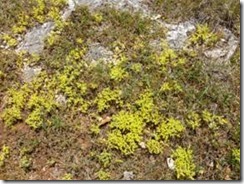
We’ll start with Yellow Stonecrop-Sedum nuttallianum, a plant we don’t remember seeing around here before but evident this year. The plant is a very small, fleshy, succulent herb that settles itself beautifully on and around stones in our rocky soil. You probably have some on your property. If not, it can easily be seen on the right side of the road as you enter BWR in front of the Verato’s property. Coincidently I saw some plants for sale at the H-E-B in Wimberley.
clip_image002
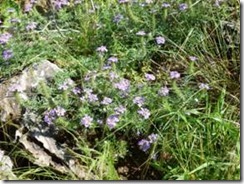
A few years back the fields were full of Prairie verbena- Verbena bipinnatifida, but since then for some reason we just have scanty patches of it.
clip_image004
In this same family, we feel lucky to have a few examples of Texas Vervain- Verbena halei, shown below.clip_image006
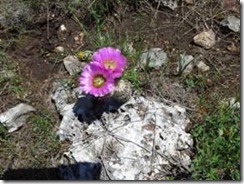
We’re all familiar with the prickly pear cactus and with all the flowers being produced, It looks like a good year for making jelly. However, there seem to be fewer Lace Cactus- Echinocercus reichenbachii or they’re blooming in short spurts, the hot pink visible one day and gone the next. Today (5-5-18) we saw around a half a dozen across from the Shuler’s, where the cows have a trail to the west. Below is a nice double bloomer.
clip_image008
Queen’s Delight- Stillingia texana is an interesting plant and as far as we know this is only one of a few on our property. It’s quite handsome with its yellow “candles” which are just now coming into bloom.
clip_image010
Marshall Enquist describes Three-Seeded Mercury- Aclaypha Lindheimeri as “being found in weedy habitats” which may be the reason it feels so at home here. I used it recently in a flower arrangement and its curved shape, color and lasting ability were very impressive.
clip_image012
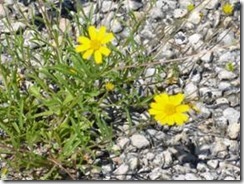
One of the many yellow spring flowers Slender-Leaf Hymenoxys- Hymenoxys linearifolia is a sturdy little annual plant with yellow daisy-like leaves. There are many of them along the roadsides in BWR this year.
clip_image014

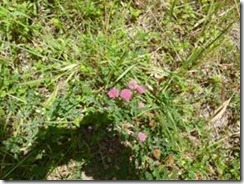
According to author Enquist, children are easily fascinated by the Sensitive Briar-Schrankia sp). They enjoy touching the leaves and watching them immediately fold up. This perennial with interesting round pink flowers has a sprawling habit and produces seed pods.
clip_image016

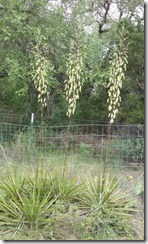
We have four Twisted Leaf Yuccas- Yucca Rupicola along the driveway and they made it to the bloom stage this year because of the wire cage. Cattle and deer like the flower buds. We want the seeds.
clip_image018
These twisted leaf yuccas are rather common, but the flower stalks are not so common as the wildlife and cattle eat them without hesitation.
We’ll end the wildflower section of the newsletter with three thistle types, two are aggressive aliens introduced from Europe and the third is our own Texas native.
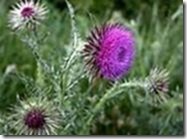
Musk Thistle-Carduus nutans is a large plant, 2-6’ with 2 ¼ to 3 ½” pink flowers. This plant was introduced from Europe many years ago for its use in gardens. The best way to identify these thistles is by inspecting the flower head. Here’s the musk thistle flower.
clip_image020Note the prickly leaves bracketing the flower.
It can be a tough plant to chop down when it is mature, but do chop it down (before it goes to seed).
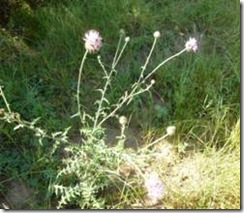
Malta Star Thistle-Centaurea melitensis is another thistle from Europe and this one is a really bad guy, as it is very prickly and aggressive. Note here that the base of the flower head is all spines.
clip_image021 We chopped a few out of our land this week. Do you remember a few years back when there were so many that it was impossible to eradicate them all? Such is the case with wild plants. They flourish one year and then disappear for a few years—you think they are gone and then here they are again. The seeds can lay dormant in the ground for years. As we were told by one of the people at King’s Feed, since the flood customers are reporting plants they’ve never seen before in the area.
The Texas Thistle-Cirsium texanum is native and not very aggressive. Additionally, it provides seeds for the birds. It exists throughout the hill country. The seeds are especially savored by the goldfinches and the other day we saw a Lesser goldfinch clutching a stem blowing frantically in the wind picking at the seeds that were left as the rest of the seed head disintegrated and swirled around him.
clip_image023
It’s well worth it to get to know the difference between these thistles. Chop out the alien ones and save the Texas thistle for the birds.
Sightings
Sightings this month are that the painted bunting arrived May 5th, right on time and the quail are talking to each other. It seems like the quail population might be down a bit this year based on the calls heard. We even heard an owl this morning. We saw only one snake so far and it was a small speckled king snake-lampropeltis getula. The range of the speckled king snake is east Texas, so its presence is a bit unusual here in central Texas.
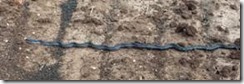
David F. sighted this Western Rat Snake-pantheropic obsoletus which posed nicely for a photo.
clip_image025
Rat snakes are common, but they can be hard to identify because they vary so much in color and in markings. This black snake variety of the Western Rat Snake wasn’t shown in our books but after getting the name from TX snakes I.D.com it was then found easily on the internet. Now I am sure it’s the mottled brown version that I saw at our old place in Medina. The snake was crawling along in front of the double stall garage and it was almost the length of a door! Rat snakes are capable of climbing trees and into the rafters of old barns looking for their prey. They are very beneficial, so take care of them.
Books of Interest
Roemer’s Texas 1845-1847 by Dr. Ferdinand Roemer. Roemer is known as the Father of
Texas Geology. He was also a well known botanist and Catclaw Acacia- Acacia Roemeriana is one of the plants named after him. This is a fascinating look at Texas with emphasis on the German immigrations to New Braunfels and Fredericksburg.
A Life among the Texas Flora Ferdinand Lindheimer’s Letters to George Englemann by Minetta Altgelt Goyne. Lindheimer, known as the Father of Texas Botany, led a very interesting life as he traveled this area of Texas in search of botanical specimens to send to Asa Gray in St. Louis. His home on the banks of the Comal River in New Braunfels has been preserved and may be visited. And, the Sophienburg Museum is a wonderful little gem of early New Braunfels history. Following is a mural seen from the parking lot of the most well known bakery in New Braunfels.
clip_image027

R & D Tusch


Wow! 2024 A year of change

 Looking back over my notes of what happened with the vegetation this year brought back memories of how much of a shift we have seen from pa...