Tuesday, August 13, 2019

Newsletter No. 19----Longhorn Cattle


Longhorn cattle have a long and colorful history.  Most breeds of cattle were developed for a particular trait, like for milk production or meat quality.  Not so with the Texas Longhorn, they evolved along chance lines from a long history and what resulted is a unique animal with some very basic instincts.

The Texas Longhorn evolved in North America from descendants of cattle brought into the Americas by the Spanish in the late 1400s and early 1500s However, the Longhorns did not descend directly from Iberian stock. Rather, the first cattle to be imported to the Americas by the early Spanish explorers were from the Canary Islands or Hispaniola. These cattle, it is said, were descended from the auroch, an animal now extinct.  So, the closest relatives of Texas Longhorns among existing European breeds are Portuguese cattle breeds such as the Alentejana and the Mertolenga.

These early imports of Iberian Peninsula cattle soon became feral in northern Mexico.  At the time, northern Mexico  included lands that became the Republic of Texas in 1836, then part of the United States in 1845.

Since the early ranches in Northern Mexico were not fenced, the Longhorn was free to roam and roam they did for the next two hundred years.   From this environment, they became feral, and from this roaming, they became Texas Longhorn Cattle.

Over a couple hundred years, these wild herds underwent intense natural selection; the only cattle that could survive were highly disease resistant, could live on harsh range conditions (through droughts, floods, heat, and cold), and could defend themselves and their calves against predators.

In the early 1800s, wild cattle, mostly Longhorns, were found throughout much of Texas. Keep in mind that this was a time when the human population of Texas was scant, so the first settlers to arrive and establish ranches were curious about these wild cattle.  Most settlers, especially those coming from the eastern part of the country, probably never saw cattle with horns this large.

During the California Gold Rush of the late 1840s and early 1850s, there was great demand for beef in California, and cattle began to be driven from Texas by the tens of thousands to meet the demand. This practice was interrupted by the U.S. Civil War, as well as the end of the California gold rush. Texans who returned to Texas after the Civil War had few sources of income, but there were lots of wild cattle in Texas.  In fact, the population of wild Texas cattle greatly outnumbered the available cattle in the eastern USA. The Civil War demand for meat and the lack of attention to farming at the time depleted the eastern stock of Herefords and other domesticated breeds. 
Figure 1__Drovers with their long horned cattle

Texans saw the opportunity to make a living by rounding up the cattle and driving them up to the rail heads in Kansas, where they were shipped to the east coast cities to satisfy a growing demand for beef in the northern states. Many famous cattle trails were established, such as the Chisholm Trail and the Goodnight-Loving Trail, and many millions of cattle (then called "Texas cattle") were driven up these trails for shipment east.[1]

The harvesting of “Texas cattle” was a big operation after the Civil War. It is estimated that nearly 4 million Texas cattle were rounded up from the brush country and sold in northern markets.

This at first satisfied the demand for meat, but then the critics of the Texas Longhorn began to complain about the quality and amount of useable meat.  One reporter[2] at the stock pens wrote “the cattle were barely able to cast a shadow and would probably not weigh anything if it weren’t for their horns, which were only useful to keep them from crawling through the fences”. 

During the late 1800s, large ranches began to be established in Texas. Fences were built, cattle were captured and contained, and the days of free-ranging cattle came to an end. Although these ranches originally stocked Texas Longhorns, most soon turned to importing "improved" European breeds of cattle. The European breeds produced more fat than did Texas Longhorns, and tallow was the primary driving force behind cattle prices at the time. However, several ranchers kept herds of the original Texas cattle, either for nostalgia or because they appreciated the abilities and native instincts of these cattle.

By the 1920s, the longhorned cattle were rare enough that the United States government assembled a herd of Texas cattle at the Wichita Wildlife Refuge in southwestern Oklahoma to preserve them from extinction. About six private herds were also maintained during the first half of the 1900s.  Most modern Texas Longhorns can be traced back to seven "families" of longhorns: the Wichita Refuge, Butler, Marks, Peeler, Phillips, Wright, and Yates lines.
Figure 2.. The Longhorn herd at L. B. J. National Historical Park near Johnson City. 


The cross breeding and the harvesting nearly made the Longhorn extinct, but not quite.  Ranchers began to see the advantages of the Longhorn in the harsh environment of Texas.  The animals could live on scant water, poor grass and were naturally tickproof.  In other words, these beasts could literally take care of themselves.

In 1964, the Texas Longhorn Breeders Association of America was founded, and a registration process was established. Thus, Texas Longhorns became a registered breed. Today, Texas Longhorns are bred and valued for many different reasons. Their naturally lean meat is now considered an advantage, and the ability of Texas Longhorns to thrive on natural range conditions without the use of antibiotics, added hormones, or the use of feedlots. This makes them a favorite for lean beef, range-fed beef, and organic beef markets. They are also widely raised for their beautiful colors and horns, and by people who appreciate the history and qualities of the breed. Texas Longhorn bulls are often used as service sires on other breeds of cattle, because the crosses produce fewer birthing difficulties and calves that grow quickly and have few health problems. Traits that stand out in Texas Longhorns are their natural disease resistance, great longevity, high reproductive rate, ease in birthing, ability to thrive under harsh range conditions, and an ability to defend themselves against predators. Longhorn cows are known to “calfsit” a bunch of calves while their mothers continue to feed.  You can see this when there are several calves lying in the grass with only one or two cows with them.

Texas Longhorns are gentle cattle and are among the easiest of breeds to handle and control. Their gentle disposition and striking looks make them favorites as riding steers, and their general health and adaptability make them ideal for small ranches. 


Figure 3__Longhorn steers in 4th of July parade

Texas Longhorns that interact regularly with people are easy to handle; as with any breed, however, cattle that rarely see humans can grow wild and wary.

Of course, caution is required among Texas Longhorns because of the long horns. These cattle never attack or harm a human on purpose, they can and do use their horns to manipulate objects and to scratch their bodies, so reasonable care should be exercised around the cattle to avoid accidental contact with the horns. Texas Longhorns will also defend their calves against dogs or any predators.

Naturally, the horns of the Longhorns attract a lot of attention, the same way that deer hunters look for the record rack.There are at least two common ways to measure horns. The tip-to-tip measurement is the easiest to reproduce: it is simply the straight-line measure from one horn tip to the other. The "total horn" method attempts to measure the horns along their curve, to get a measure of the total length of the horns. This measurement is much harder to replicate accurately, but it is the best method of the total horn length. The tip-to-tip measurement assigns longer values to straight, lateral horns than to upwardly curving horns of the same total length.

Every year, the Horn Showcase competition is conducted by the Texas Longhorn Breeders Association of America. This competition obviously does not include all the living Texas Longhorns, but owners of prized animals enter their longest horned cattle in the competition and so the winners are at least among the longest-horned Texas Longhorns.

Here are some typical measurements from the 2006 competition:

The Texas Longhorn cow with the widest horns (tip-to-tip measurement) was Day's Feisty Fannie, at 82 inches.

The Texas Longhorn cow with horns of most length (total horn measurement) was Sunrise Hope, at 97 3/8 inches.

Steers tend to have longer horns at maturity, and at the 2006 Competition the Texas Longhorn steer with the longest horns (total horn measurement) was Gibraltar at 126 1/2".  Heck that’s only ten feet.

In Bridlewood, the Millers and the Shallenbergers manage a herd of Longhorns which grows to about 100 head. Then, at roundup time the herd is reduced so that they can start the process all over again. They provide an update on the herd at our meetings so that we can stay informed about the calves and the status of the herd.

·        Longhorn calves can be any color, not necessarily the color of their parents, but the dominant colors are russet and white.

·        Calves can be a bit erratic and frisky, so when they are near the road, drive carefully, because they can behave like the proverbial chicken that runs across the road at the last minute.

·        Cattle are experts at finding holes in fences, so walking the fence line is a good thing to do, especially in the winter.

Following are some photos that we pulled from our files.    Many are our favorites and even get special names, even though their owners have their own names for the same animal.


Figure 4___Cow and yearling—current time


Figure 5___Peaches—file  photo

This is Peaches with a 9 foot horn spread.

We don’t have a photo of Fudge, but Fudge was an elderly cow, nigh onto 23 years of age and died this spring.   She was getting feeble and could not move with the herd.

This last year the older bull disappeared and no one knows where he might be.  He could have died in some remote spot on the ranch; or he might have escaped through the fence, but that is unlikely as the fence was patrolled after his disappearance and no fence hole was found. Supposedly we might have sophisticated rustlers who would cut the fence, drive him out and then mend the fence.  Nevertheless when walking your own land, keep an eye peeled for some white bones.


------SIGHTINGS-----


Figure 6__Leaves and flowers of Wafer Ash

The flowers of this Wafer Ash, Ptelea trifoliata are almost impossible to see in the photo, but if you zoom in on the photo the wafers become apparent.  We discovered this not-so-rare tree growing on the side of Cedar Road in Kyle (look at this road as the extension of Limekiln Road which is on this side of the Blanco River).  This fall, we will collect some seeds to see if we can grow this tree.  The seed pod is a flat wafer about the size of a half dollar with one seed in the center.

It is really dry now from the lack of rain, but there is one shrubby tree that really likes dry weather. It’s the Prairie Flame-leaf Sumac, Rhus lanceolata that you find scattered throughout the ranch.  Some of the more mature plants are blooming right now.  The yellow jackets like the flowers and the quail like the seeds that the flowers produce.  This photo was taken in front of our place along the front fence line.
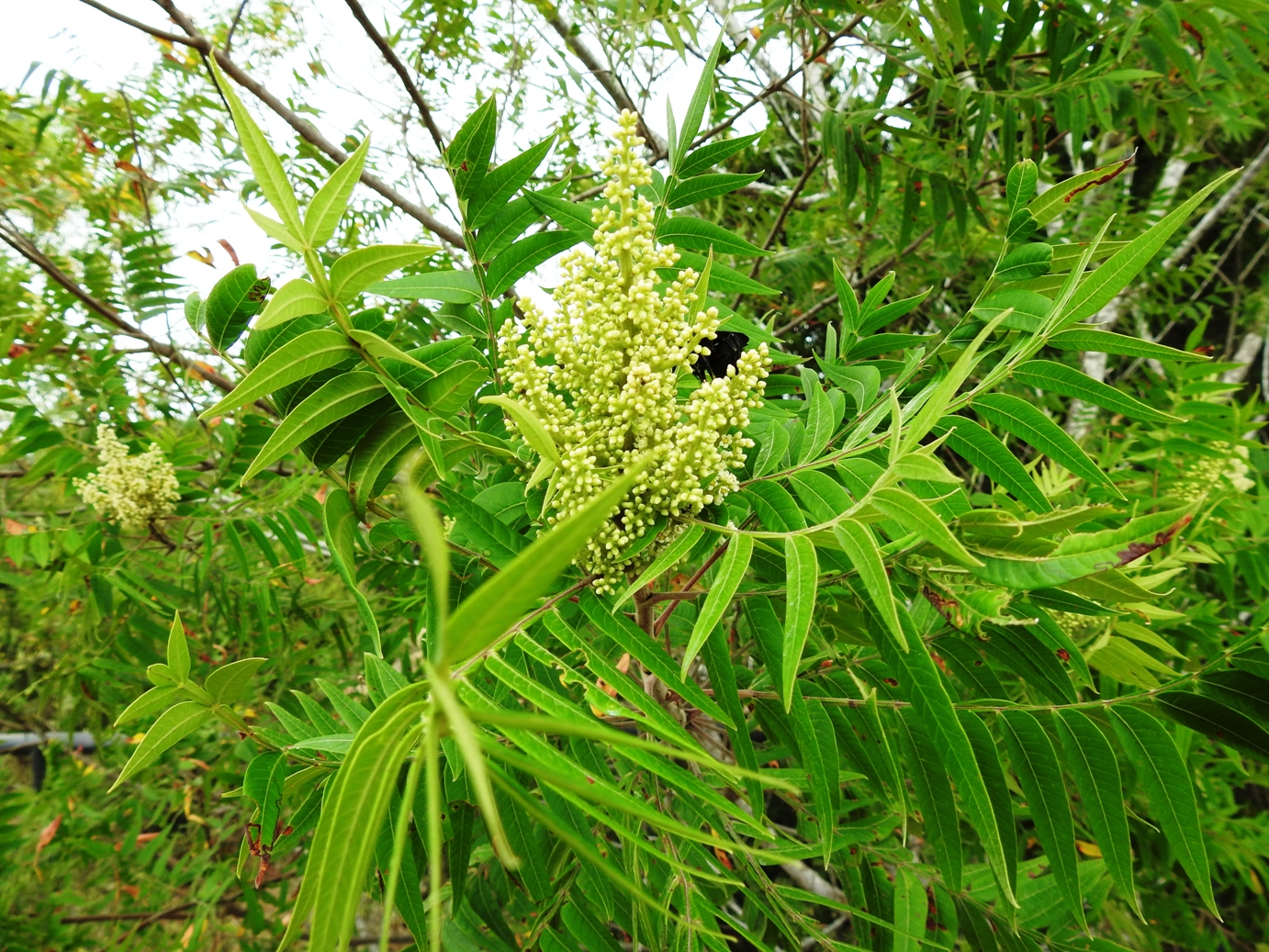

Figure 7__Flower head of the Prairie Flame-leaf Sumac

The black part of the image is the yellow jacket having lunch.
Since all flowers are made up of a lot of water, they become scarce during droughty times. Although common, this plant is quite unusual.


R & D Tusch


[1] There is an excellent Chisholm Trail Museum in Cuero.
[2]The Passing of the Longhorn by  Havins, The Southwestern Historical Quarterly July 1952.


Thursday, July 18, 2019

Newsletter No. 18---Stone Fences


Since we began these newsletters last year, we have found that the new subjects we decide to discuss are derived from further research into old subjects we wanted to know more about.  Since we took another look at the stone fences here in BWR, we have been on the lookout for more stone fences in Hays County. In the meantime, having found no books written exclusively about stone fences built in Texas and fired up by reading Robert M. Thorson’s book Stone By Stone: The Magnificent History in New England’s Stone Walls[1] we were ready to see what else we could find.  

In May after we’d had a big rain, we took a ride north of Wimberley and while noting the high water marks on the streams in that vicinity, we also noted several examples of old stone fences.  However these were not “tossed” limestone fences, made of crudely placed fieldstones, but elegant stone on stone dry-laid fences in the English or European style. The Wimberley and San Marcos libraries


  Figure 1  Double stone fences north of Wimberley

had no information online and we later visited  the library in Dripping Springs to speak with their staff.  Tammy couldn’t find anything about the fences and who had built them while we were there, but later she emailed some interesting information.  I found Mike Cox’s article on Rock Fences on TexasEscapes.com.  Cox says “…the Hill Country is noted for its numerous rock fences, stock pens and cemetery enclosures.”  He goes on to mention the settlements of German immigrants and the availability of suitably shaped rocks.

Down the road on Bear Creek near Driftwood in 1947 Roy Bedichek wrote his book Adventures of a Texas Naturalist and had the following to say about the building of the old stone fences.  “Some idea of the cheapness of labor in that period may be gained by the knowledge that it was profitable to enclose five-dollar-an-acre land in a fence weighing not less than a ton per linear yard.  Besides, the stone was often hauled a mile or two and much of it required chipping to make it serve.  It is true that there was a little offset in the cost of this enormous task, since some of the land selected for fields had to be cleared of loose stone anyway.”
Figure 2  A chinked rock fence on Mt. Gaynor road north of Wimberley.

According to the authors of Clear Springs and Limestone Ledges, the settlers of the communities of Mt. Gaynor and Gatlin were mainly English.

German-built stone fences can be seen on Hunter Rd. as it leaves 1102 and veers off to the right before reaching 306.
Figure 3 Fence on Hunter Road

Some of these fences on Hunter Rd. extend for long distances.  This one turns the corner onto one of the ends of the High Low Loop Rd.

Described in the book Built in Texas[2], the fences were many times built by the owners including wives and daughters.  If hired men were contracted, according to a Comal County letter of 1870, the cost was $.10 to $.12 a yard if the farmer supplied the stones and rose to $.35 a yard for builder-supplied stones. A substantial chinked fence began with a shallow trench in which the largest, flat stones were laid.  The next largest stones were laid crosswise on top and this was repeated for three to four feet.  If the builders were supplying the stones, they hauled them to the site with an ox-drawn sledge. And if a higher fence was required, the builders had to stand on a wagon to place the stones. 

The faces of the chinked fence were to be as smooth and high as possible to deter climbing animals, keep the large stones balanced and in place and to create a long-lasting fence. To this end, smaller stones were forced into spaces between the larger ones.  That’s called chinking.

Another reference to the cost of the fences was found on the internet in the Eckert Record,[3] a family history self published by Estella Hartmann Orrison in 1957.  According to the book, an 18 year old young man arrived in Galveston from Hueffenhardt, Baden, Germany and learned the stone fence building trade in order to pay off his uncle’s loan of $50.00 passage money.  His day began at dawn and ended at dark and he earned $.50 a day                 

This fence builder was named Louis Grosz and I learned that Germans were definitely among the stone fence builders in Texas.  But as I read about these hardy people, I found that they also came from a grape-growing region in Germany and the founder of the Texas Eckert clan, Georg Bernhardt grew grapes as his farm’s main crop.

Figure 4..
Georg Bernhardt Eckert
1793-1874


As to whether the grapes were table grapes or a wine grape was evident when I read about his eldest son, Karl Friedrich who also had a vineyard and operated a winery.

I won’t go over the history of New Braunfels and how it originated as I’m sure it is a familiar story to everyone.  The Germans, many of whom already had relatives in Texas were well informed about how things were progressing here in the 1850s and many were anxious to leave the old country and its political and industrial problems for new opportunities.

  Karl Eckert, informed by a cousin named Yonkers living in Fredericksburg, was one of those anxious to move his family to Texas.  However he could not persuade his widowed father Georg Bernhardt, age 60, to join them.  Georg, who had fought in his youth to save Prussia from Russia, loved his country and apparently enjoyed living with his eldest daughter, Katharina, and her family.
Figure 5..
Karl and Eva Christina Eckert


In 1853, Karl, his wife, Eva, and their 4 children were joined by Karl’s two brothers Georg Philipp and Bernhardt for the journey to Texas.  They landed at Indianola and were met by cousin Yonkers. Their route roughly followed US 87 north.  Bernhardt became ill and Georg stayed with him in Meyersville in DeWitt County.  During their short stay in Meyersville, Georg apparently also continued his courtship of ship passenger Margareda Vogler and he
Figure 6..
Georg Philipp Eckert and his wife  Margareda Vogler Eckert

married her with Bernhardt (perhaps) as his best man.  The three of them joined the rest of the family in Fredericksburg soon after. 

Two years later Georg and his older brother, Karl, moved their families to a less settled area near Beaver Creek N.W. of Fredericksburg and S.E. of Mason where the community of Hilda is now.  Time passed and by the 1870’s the original log house became a neighbor to a new home built of sandstone.  More land was acquired and rock fences replaced rail fences and pens.


Figure 7-- Examples of Stone Fences in Mason Co.

Family members built rock[4] fences to hold a couple thousand sheep and
hundreds of cattle.   Half of the sheep were kept near the house and the rest were tended on land over on the Salt Branch Loop.  The children mostly took care of the shearing.  Georg tended his grapes, made wine, was a carpenter, built furniture and worked at his blacksmith forge.  In later years rockwork building and maintenance was contracted out.  
Figure 8-- See how far this fence travels across the land


Karl Eckert was Louis Grosz’s uncle and the generous provider of passage money for Louis and his 21 year old sister, Katharina.  Karl had written his nephew advising him what tools to bring with him as he and Katharina were expected to find work and pay him back after they arrived in 1871.  They worked hard, retired their loans, married locally and lived in the area. 


Figure 9 Ludwig Philipp (Louis) Gross[5] and Christina Ischar Gross

Once Louis had retired his debt he left the backbreaking masonry business and turned his efforts to stone cutting, farming, furniture building and black- smith jobs. In following years when his sons were older, they did take on some fence building jobs farther afield and camped out until the job was done.  The young men hauled the stone and Louis dry-laid them to add to the family’s income.

Now one hundred and sixty-six years later after this branch of the Eckert family arrived in Texas, stone fences can still be observed in Mason County and grapes are still being grown to make wine. Some of the grapes go to Fredericksburg wineries, but some wine tastings are now being held in the Mason area as well.

Back again closer to home; it’s so nice to see old artifacts being preserved as progress changes the land to new uses.  The following photos were taken in the 1200 acre Rockwall Ranch subdivision on 1863 east of Bulverde and north of Schertz. It was the Tschoepe Ranch originally and the entire perimeter has remnants of a 100-year-old dry-laid rock wall. 
Figure 10--Rock Wall Subdivision in Comal County

The developers appear to be doing a good job of saving not only the walls but the beautiful trees such that their sites seem serene and appealing even though small.  Not very far from Schertz and I-35; it’s a beautiful little country oasis.[6]

-----Follow Up-----

It now appears certain from the records at hand, that the Reuben Pierce family never lived on their land that eventually made up part of Bridlewood Ranches.

------Sightings------

David F. reports that they have found an old concrete water trough and the foundation of a windmill tower on their property.  They plan to clear out around it this winter when the snakes are asleep.
Figure 11..Relic Concrete tub for cattle water


The cicadas are loud again this year and this time we managed to catch a male singing his heart out for his mate.  You can see and hear this on YouTube as we posted it there.

https://www.youtube.com/watch?v=HDYlzplieOg

The phoebes always produce at least two batches of birds each year and they stick around to amuse us all year.  Here is a photo of the phoebe with lunch for the new birds.

Figure 12.. Phoebe with green worm


R & D Tusch


[1] Mr. Thorson is a University of Connecticut geology professor.  And his fascinating book begins with the Big Bang, ancient continents, the formation of ice sheets and the rock materials they left behind as they melted and receded.
[2] Edited by Francis Edward Abernathy and published by the Texas Folklore Society number XLII. Page 182.
[3] Many thanks to Charles Eckert in Mason for permission to illustrate this article using members of his family.
[4] We were told in Mason that Northerners say stone fences and farms, Texans say rock fences and ranches.
[5] Formerly spelled Grosz
[6] And no, we don’t own an interest in it.

Friday, June 7, 2019

Newsletter No. 17----Dark Skies/Land History Part 2


Saving Dark Skies is worth some thought.  At one time, the preservation of dark skies was a consideration only in areas around observatories so that light scattering in the sky did not interfere with telescope operations. However, it has now become an issue of concern to fast growing small towns all over the nation where people no longer have a clear view of the night sky they once had.

Figure 1 Satellite view of the mainland U.S.
 If you enlarge Figure 1, you will see it will have taken only 75 years from the late 1950s to reach the projected light pollution density expected in the U.S. in 2025.  That is only 6 years from now.

The International Dark Skies Association (IDA) works with communities across the country to develop better lighting practices that cut the glare and sky scattering by focusing on task lighting and directing the light down rather than up and out. As an additional benefit is that our energy consumption is significantly reduced. The IDA is not against lighting it is simply for lighting that does the job in the best possible way.

Here in our area of Texas, the city of Dripping Springs was the first town to work actively to become a dark sky-certified place.  It has been followed by the City of Horseshoe Bay and the Wimberley Valley.  Nearby towns that have applied to become certified are Buda, Blanco and Fredericksburg.

The effects of light pollution comprise many aspects; following are some of the most important: Safety and Security, Light Trespass, Energy Waste, Nature and Human Health.

Safety and Security.  Studies have shown that poorly designed artificial lighting which floods an area does not prevent accidents and crime.  However, glare is a big problem.

Figure 2 Glare from unshielded lights


Imagine driving down this street at night.  The American Medical Association says, “Glare from nighttime lighting can create hazards ranging from discomfort to visual disability.”  When glare from bright unshielded light shines into our eyes our pupils constrict.  This can not only be blinding, it also makes it more difficult for our eyes to adjust to lowlight conditions when that becomes necessary.

It has also been shown that unshielded bright lights which create  hard, dark shadows make it easier for thieves to case a property and see their way to a safe get away.

Figure 3 Shielded and unshielded effects
Above (Figure 3) is an example of glare causing hard shadows.  This home’s backyard is lit up at night with a blinding light. When the glaring light is blocked  the figure can be seen in the doorway of the fence.   Probably not someone the homeowner would want to encounter in the dark.

Light Trespass. [1] Light trespass occurs when stray light shines onto neighboring properties. Light trespass infringes on the property rights of the neighbors who have unwanted light intruding onto their property. It can lower property values, reduce the quality of the nighttime environment and be a general irritant. Wouldn’t you want to have the full enjoyment of your property without being forced to live with unwanted light directed onto it?

To eliminate light trespass, shield and aim all lights on your own property so the illumination stays within your own property lines. If you can see the source of the light, that is the bulb or refractive lens, from a neighboring property then that light is committing light trespass.


Figure 3 Light trespass
These standing unshielded light poles are a good example of light trespassing into the windows of the adjacent apartments and home.


 Energy Waste


Figure 4 Light going up and out

 In the previous picture, (Figure 4) it is very apparent where much of the light is going.  How much better it would have been if the homeowner had purchased a shielded light and positioned it to light the driveway area.


Figure 5 Shielded lighting example
This homeowner has a light like the one above, (Figure 5) but they installed a shield on the light and probably were able to use a lower wattage bulb.

The following photo (Figure 6) shows that while this lighting fixture may add a nostalgic look to the area and be 40% productive, it is really an inefficient, costly and wasteful device being funded by the municipality’s tax payers.  

Figure 6 Tradeoff between fashion and useful
Preservation of the Night Sky 

With our current choices in lighting 80% of the U.S. population has never seen the Milky Way.  At Big Bend National Park, a Dark Sky Place (2012), one can now see the light pollution from El Paso 300 miles away. The following Texas Parks and Natural Areas also opted to become Dark Sky Places: Copper Breaks State Park (2014, Enchanted Rock Natural Area (2014), South Llano River State Park (2017) and Big Bend Ranch State Park (2017). 

Figure 7 The Milky Way
According to IDA “Experiencing the night sky provides perspective, inspiration, and leads us to reflect on our humanity and place in the universe. The history of scientific discovery and even human curiosity itself is indebted to the natural night sky.

Without the natural night sky we could not have:

·         Navigated the globe

·         Walked on the Moon

·         Learned of our expanding universe

·         Discovered that humans are made of “stardust “


Wildlife and Ecosystems

Figure 8 Confused Sea Turtle


Figure 8 shows an exhausted sea turtle that cannot find her way back to the water after laying her eggs, all  because of reflected artificial light which upsets the natural light’s reflection on the water. When the little turtles hatch, they will have the same problem finding the path to the sea.


Frogs won’t call for mates if there is too much light at night.  And, the 120 species of fireflies, each having a little different blink will only mate if they see their own species.  Small animals that hunt at night increasingly become prey and even night blooming flowers aren’t in sync with their pollinators. And the list goes on and on.

Figure 9 The well lit city
Cities like this one shown in Figure 9 with unregulated night lighting in the paths of migratory birds are lethal and need to join a “Lights Out” program.

Figure 10 Effect of Artificial light on crop growth
The red areas of these soy fields have already been harvested while the green areas under constant natural and artificial light have not yet ripened.


Human Health

Much research is now being done in the realm of light and how its wave lengths affect us.  We know how it can affect our

eyes, skin, immune system and sleep.  The last two have to do with our production of melatonin. Melatonin is a hormone made by our body’s pineal gland.  The eyes’ retina when exposed to light stimulates a nerve pathway to the hypothalamus in the brain which has a special center, the suprachiasmatic nucleus (SCN).  The SCN initiates signals to other parts of the brain that control hormones and other functions that make us feel wide awake or sleepy.  SCN signals melatonin production around 9 p.m. as long as there are no bright lights (think natural light from far away stars and moon.  Even a bright refrigerator light on for just 3 seconds can interfere with melatonin production). In the morning, with the advance of natural light, melatonin production slows to low levels for the day around 9 a.m. when SCN begins raising the body’s temperature and releasing stimulating hormones like cortisol.

Figure 11 Darkness and circadian rhythms
Some of us feel that our circadian rhythms are better served by choosing to stick to Standard Time or Daylight Saving Time and it looks like we Texans may someday be able to vote on our preference.

Figure 12 Color spectrum of various lights


One of the most interesting subjects we covered in the Dark Skies presentation at the San Marcos Library was the harmful effects of blue light and how to block it.  A glance at various web sites will show you inexpensive glasses that will save your eyes from blue light emitted by LED and fluorescent lights, tablets, phones and computer screens.


Land History---Part 2

We will pick up from Land History---Part 1 by covering some interesting additional findings.

We thought that there was a chance that one of the six land patent holders lived on the land rather than viewing the land as cash or using it as grazing land.  A check of the census of 1880 shows that the Reuben Pierce family lived in this immediate area, but where they lived is hard to determine.   Census takers usually went down the road from dwelling to dwelling so all we know from the census are the names of his neighbors, but those neighbors may have been miles apart.  Our local contact is reviewing the census sheets to see if he can find a clue to the location of the residence from his knowledge of the names next to the Pierce family. Right at the present, we would like to believe the Reuben Pierce family lived for a year or so on the tract which became part of BWR.  However, until a foundation or other physical evidence of a residence is found, this is only specultation.

Another bit of history shows up from probing the Pierce files.  It turns out that Reuben Pierce’s son Reuben married Callie Saunders daughter.  Yes, that’s the Saunders family featured in the previous newsletters.  Reuben II became a preacher and died rather young.  He and Callie II are buried in the Seguin Cemetery.

Figure 13 Pierce gravesite in Seguin


In the old days of wagons and dirt trails, many people married locally as there was little opportunity to meet others from outside the area where they lived.

Old USGS maps (Figure 14) show a few things relating to our lands that are interesting to note.  There were only one or two roads on the ranch, one was from the starred gate on Hugo road to the windmill on the Vinson property.  It wandered past Lake Bridlewood and crossed from one side to the other of BWR Drive in the track to the windmill.  Wait until the next drought and the cattle have the grass chewed down to see some of the old vestiges of the road. Also on the USGS map are what appear to be dashed lines representing the stone walls of the area. 

Figure 14 USGS Survey Map


Another way to see the evidence of the old roads is to use Google Earth and go back to the earliest view of the ranch that has the clarity and check the roads.  The road from the starred gate to the Eakin gate area is plainly visible.

The land survey map of the Heep Ranch prior to its sale shows a well casing in an area somewhere on the Stratton property. At this time, not much is known about this well, whether it was for water or for what other purpose.  Many years ago, we picked up the rumor that the developer was planning on dividing the 1676 acres into much smaller lots but when a test water well was found to be lacking in water, that plan was dropped in favor of selling the land in the configuration that we now enjoy.  The well casing may be that test well.  We will address that question when we meet with the elder Kutscher.

We plan to do more study of rock walls since stumbling onto some rock walls in the northern part of Hays County.  There, the word is that “English settlers” built the rock walls. There, the walls are laid up like one would lay up a brick wall.  All squared and no mortar—the joints are chinked with small stones for stability.  Some research on the subject indicates that there are two types of stone walls from the 1800s.   One kind is the squared, neat and tidy, and the other is referred to as a dumped wall.  We have the dumped wall.  The cause for the difference may be cultural or it may be due to the kind of stones found locally.  For sure it does take a stone of lamellar shape and our local rock is not that for sure.  More on this subject later if possible.

______________Sightings

You never know when you are about to make a good discovery, so you need to be alert to the clues.  We were talking to some Master Gardeners and Master Naturalists recently in Sattler and drifted on to the topic of the Austin Garden Plant brochure which everyone finds to be helpful.  We have always been on the lookout for a way to buy many copies to give to friends and neighbors.  They thought they had a box full of these guides they would sell us for a dollar a copy.  But then they said “you know its online now, don’t you?”  Well, we didn’t.   Now, the fact that it is online is better because with a touch screen you can enlarge the hi-def photos of the plants in the brochure to see some detail, and, you can access the information in the field. You can find it by searching for Austin grow green guide pdf. 
R & D


[1] From IDA

Wow! 2024 A year of change

 Looking back over my notes of what happened with the vegetation this year brought back memories of how much of a shift we have seen from pa...